◆
Configurable tax compliance
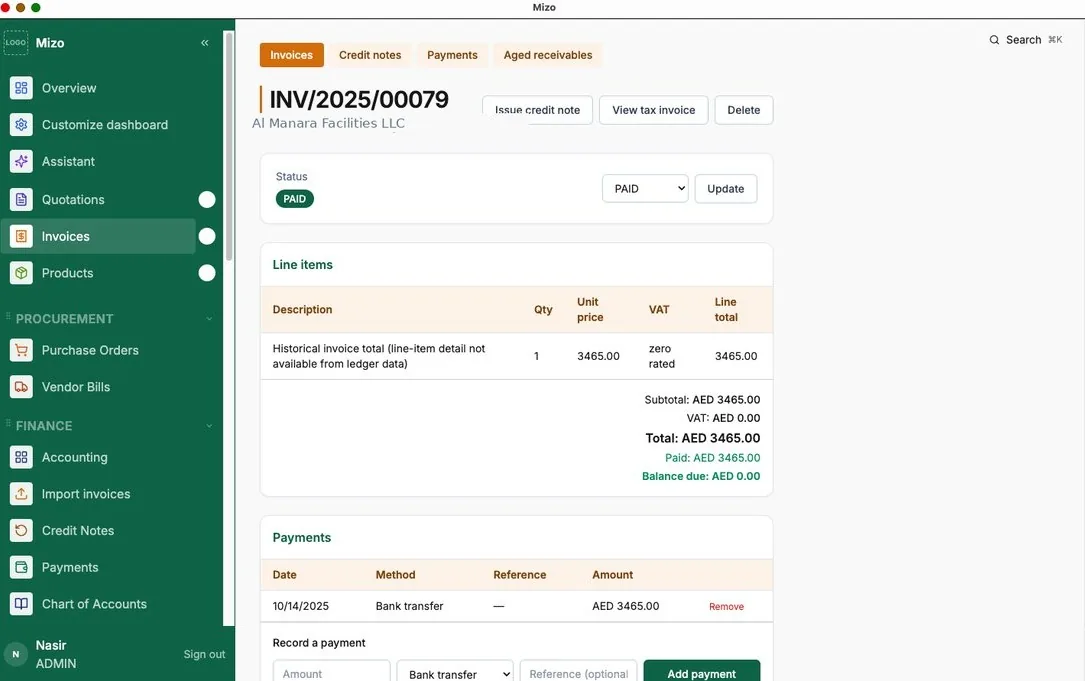
VAT, GST, or sales tax, including multi-currency invoices — the engine adapts to your jurisdiction's rules instead of assuming one, and stays ready as e-invoicing mandates roll out. The rounding logic has been tested against thousands of randomly generated invoices.
◆
Lock dates
Close a period and no document — new or edited — can land inside it again. The control most SME-tier tools skip entirely.
◆
Real inventory valuation
FIFO cost layers and landed-cost allocation across container shipments — not a flat average that quietly drifts from reality.
◆
Granular permissions
43 distinct functional areas, each independently grantable at view, edit, or approve level — not three broad roles. A user can approve purchase orders without ever seeing payroll.
◆
Ready for your industry on day one
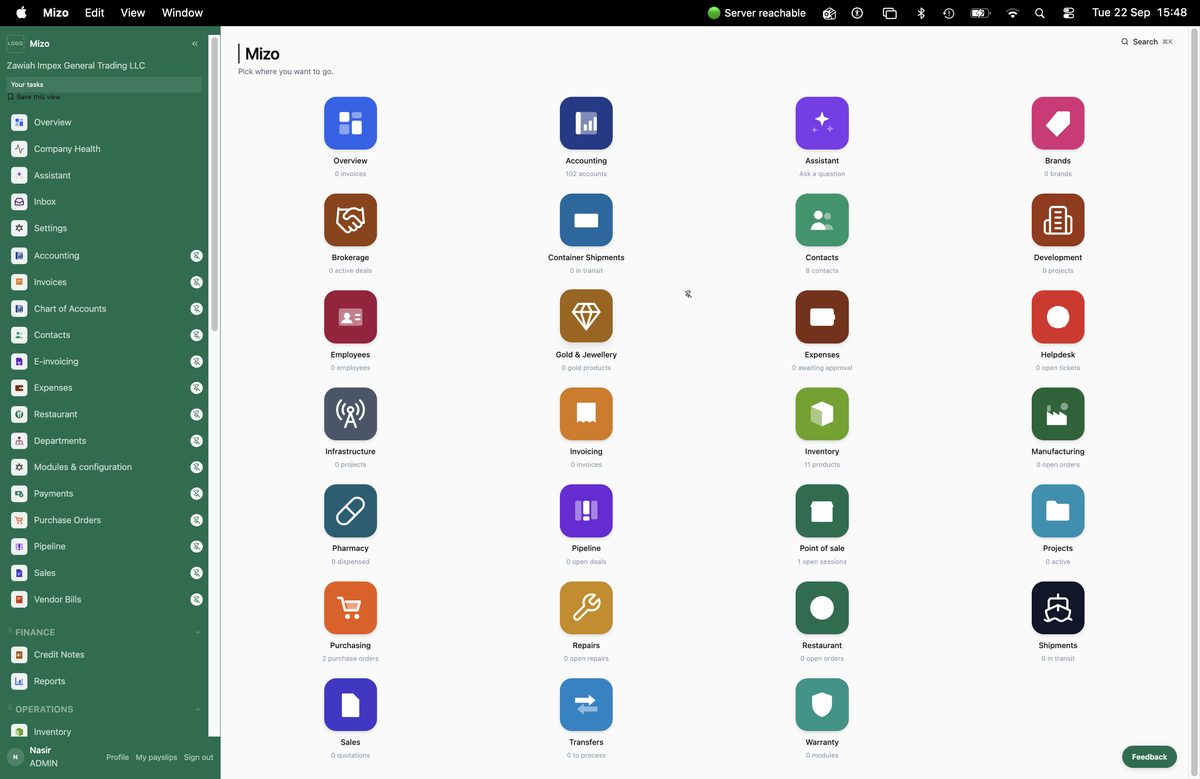
Guided onboarding for construction, pharmacy, jewellery, general trading, real estate, and energy — each with its own setup, fields, and starting data, not a blank ERP you have to configure from scratch.
◆
Bulk import and export, everywhere
Bring in your contacts, products, invoices, and chart of accounts by spreadsheet, with a preview before anything is saved — and export any list back out the same way.
◆
An AI assistant built into every module
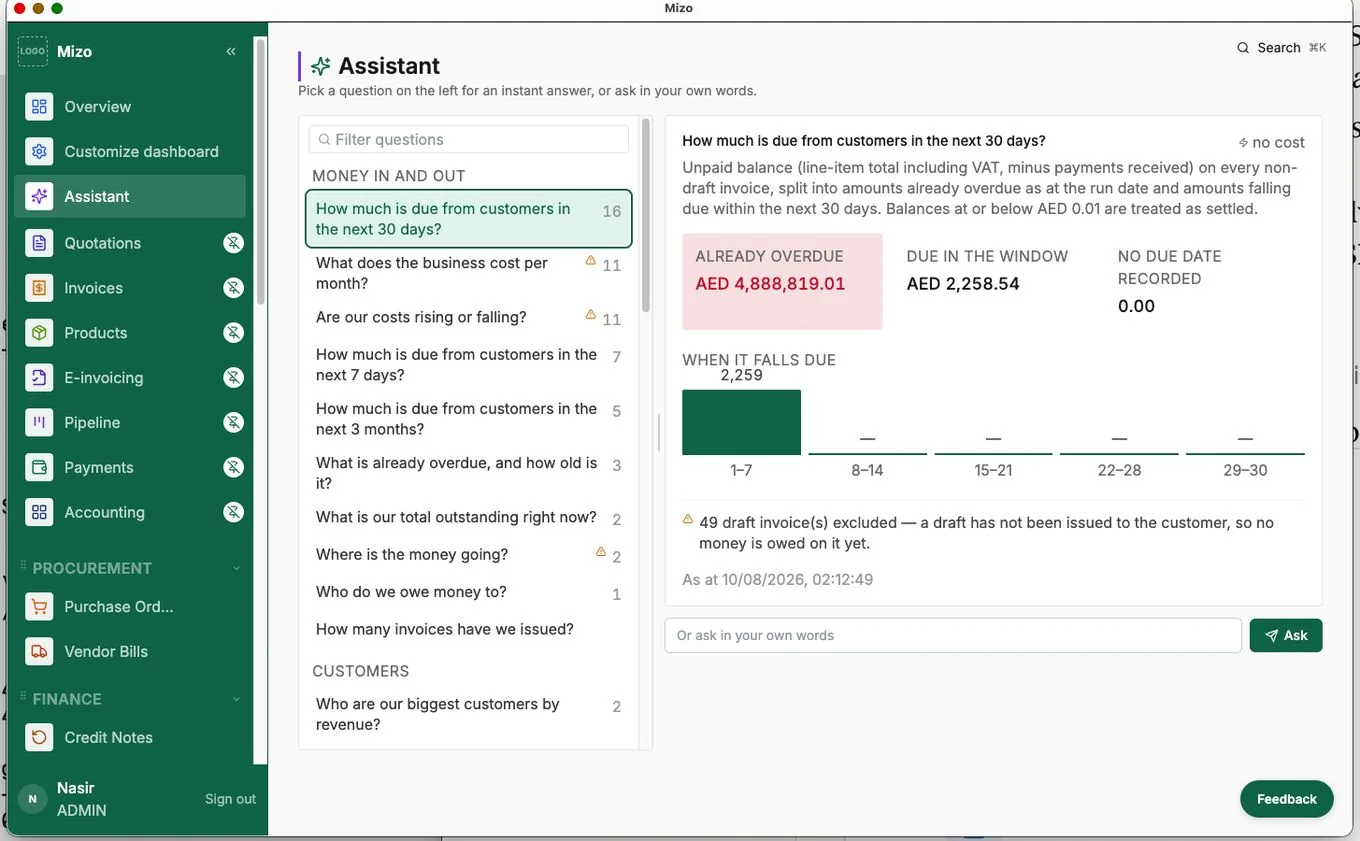
Ask a plain question about your own data, right where you're working, and get an instant, accurate answer — known questions never touch a language model at all.
◆
Real documents, on demand
Generate invoices, quotations, and reports as polished PDF documents straight from the record — nothing to format by hand.
◆
Projects, built in
Track work by project — costs, tasks, and progress in the same system as the invoice and the inventory it's tied to, not a separate tool you reconcile by hand.
◆
Vendor RFQs with real bid evaluation
Run multi-vendor RFQ rounds with configurable scoring across price, payment terms, lead time, and vendor credibility — non-compliant bids flagged automatically, not buried in a spreadsheet.
◆
Vendors manage themselves, through their own portal
Vendors log in to submit RFQ responses, track orders, and upload documents directly — no more chasing quotes over email.
◆
Vendor scorecards and supply-chain visibility
Track vendor performance, supply position, and purchase analysis over time, so you can see who's actually reliable — not just who quoted lowest.
◆
Reorder alerts that never place an order for you
Mizo flags stock below par level and tells you what to reorder — it warns, it doesn't auto-order.
◆
Bank reconciliation, matched automatically
Upload an Emirates NBD statement and Mizo matches it against your ledger line by line — not a manual month-end chore.
◆
Keyboard shortcuts for the screens you use most
Move through Mizo without reaching for the mouse — shortcut keys are built into the screens you use every day.
◆
Your inbox, connected — whichever one you use
Outlook, Gmail, or any other IMAP account — Yahoo, iCloud, a custom domain — connect it once and replies to what you send appear back in the record automatically. No forwarding, no copy-pasting.
◆
Drill down from any number
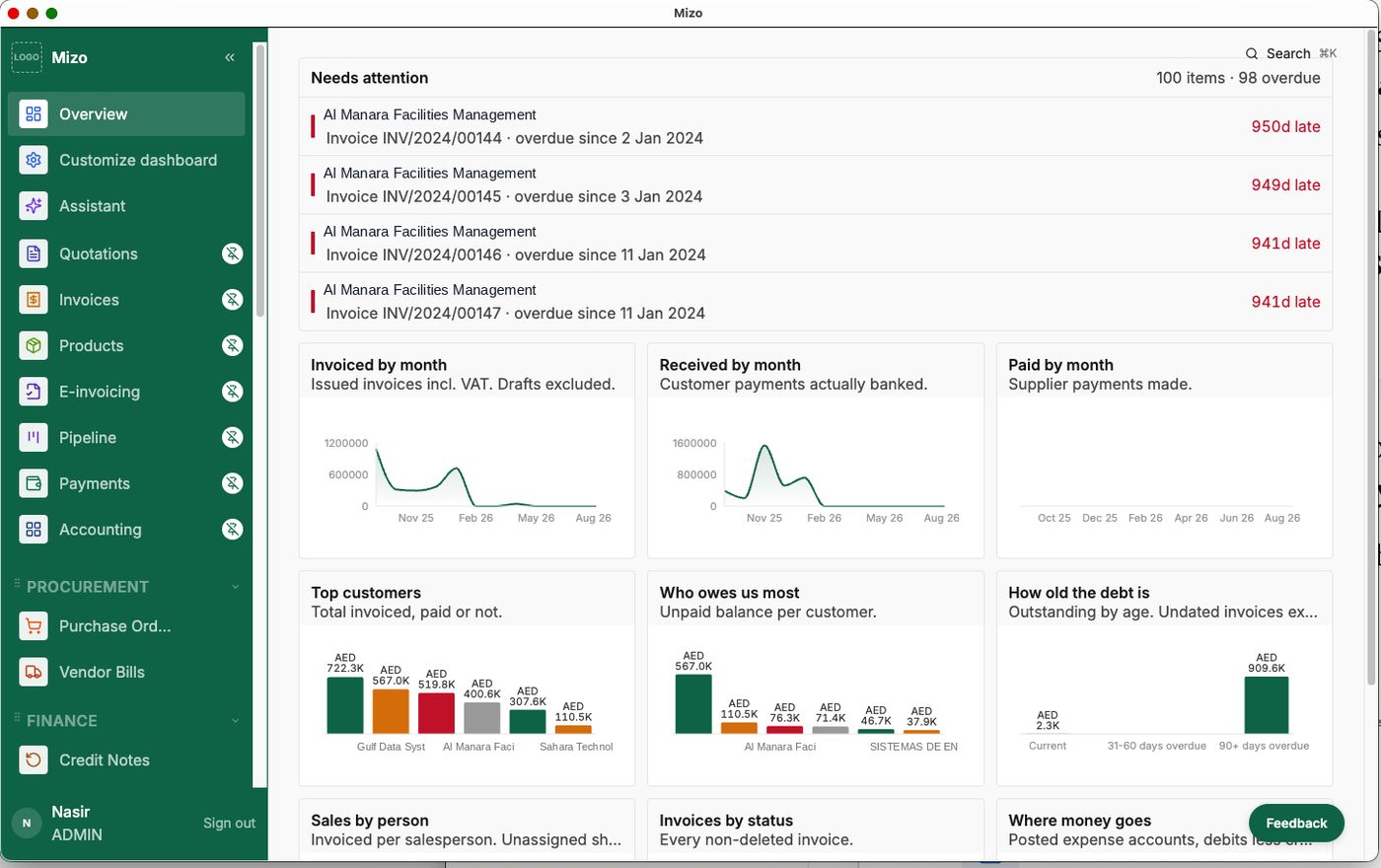
Every total on a report is a link — click through straight to the transactions behind it, no export, no re-running a query.
◆
Sign in with your fingerprint, not a password
Passkey sign-in — Face ID or fingerprint instead of typing a password and a code. The old sign-in still works; this is an option, not a replacement you’re forced into.
◆
A second person signs off on the big payments
Set a threshold, and any vendor payment above it needs a second person to approve it.
◆
Conflicting permissions, caught both ways
Assign someone both sides of a conflict — raising and approving their own purchase orders, say — and Mizo flags it when you assign it, plus a dedicated page lists every conflict already on the books.
◆
Deposits, accounted for properly
Take a percentage or fixed deposit on a sales order, and it nets correctly against the final invoice — recognized as revenue only when it’s actually earned, not the moment the deposit lands.
◆
Multi-currency, done properly
Real exchange rates on invoices, vendor bills, and credit notes, with genuine FX gain/loss computed on payment — not a rate copied once and left to drift, and a credit note nets to zero against the invoice it reverses.